What Is Restaurant and Cafe Millwork?
Restaurant millwork is the built cabinetry customers see and staff use every shift: the bar, the back bar, the host stand, the cafe counter and the bases under banquette seating. It takes more abuse than any kitchen. Stools kick the face, glasses slide across the top, citrus and alcohol hit the surfaces, and everything gets mopped at 2 a.m.
We build restaurant millwork with the same shop and crews as our custom millwork, but with commercial materials and a schedule tied to your opening. Most projects are in King West, Little Italy, Ossington and Dundas West.
Types of Restaurant Millwork
Bars and back bars
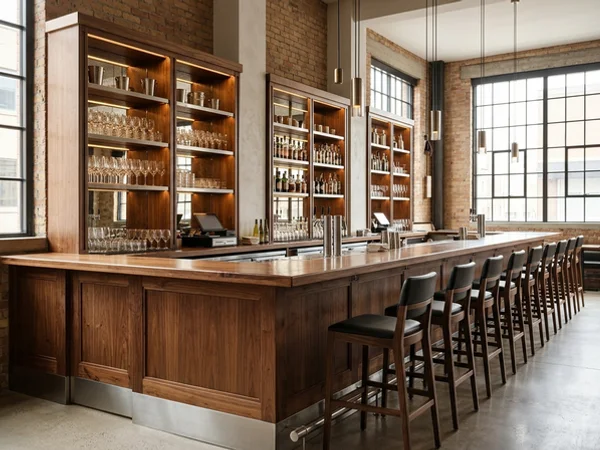
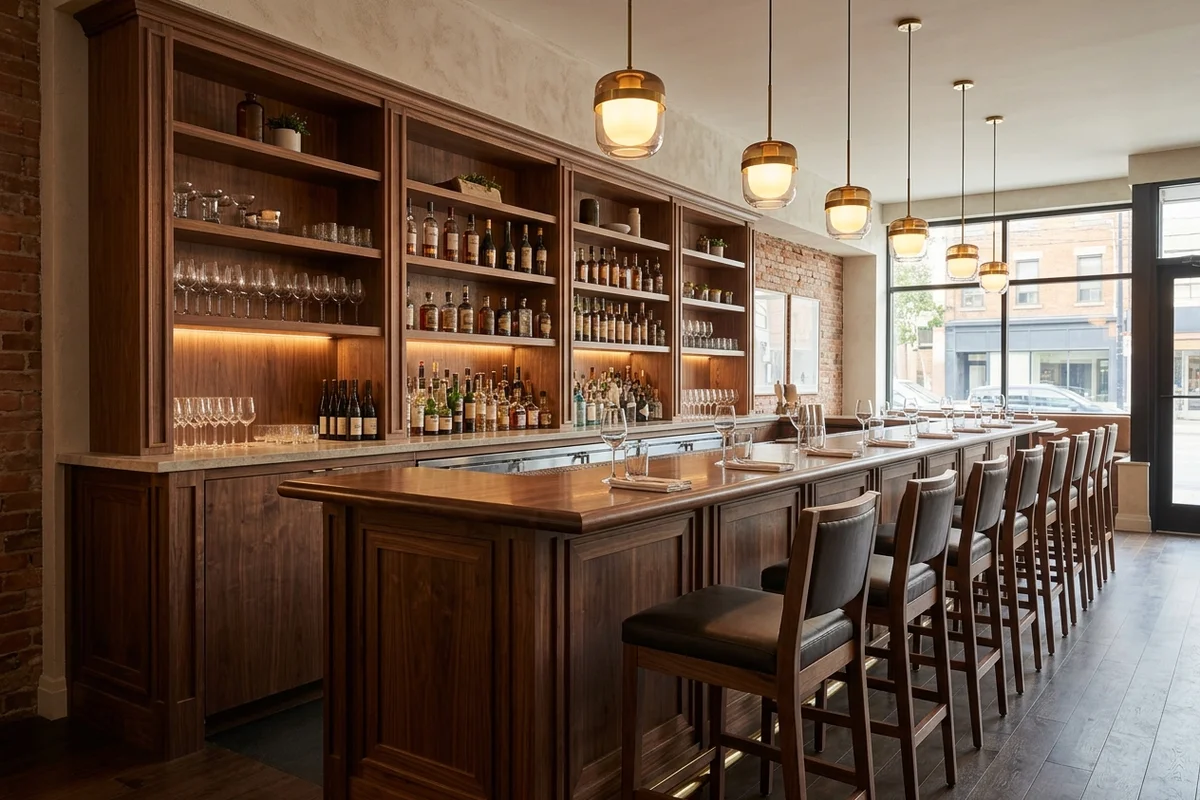
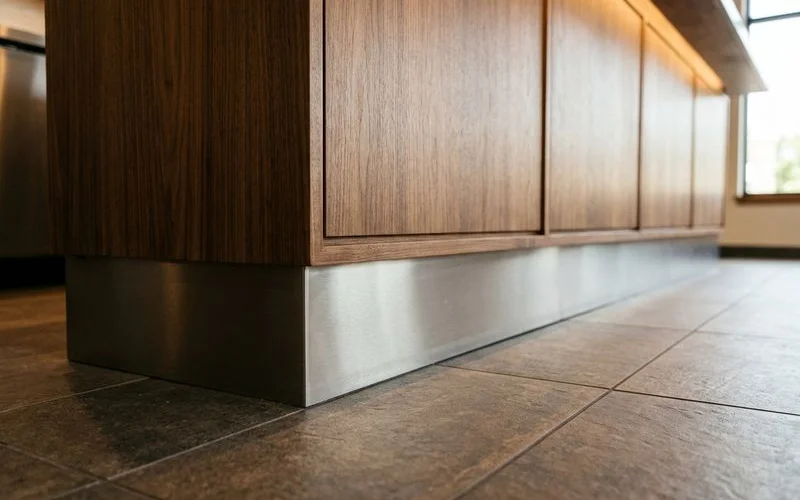
Front bars in hardwood with HPL working tops and stainless kick plates, back bars with lit shelving and locked storage.
Host stands
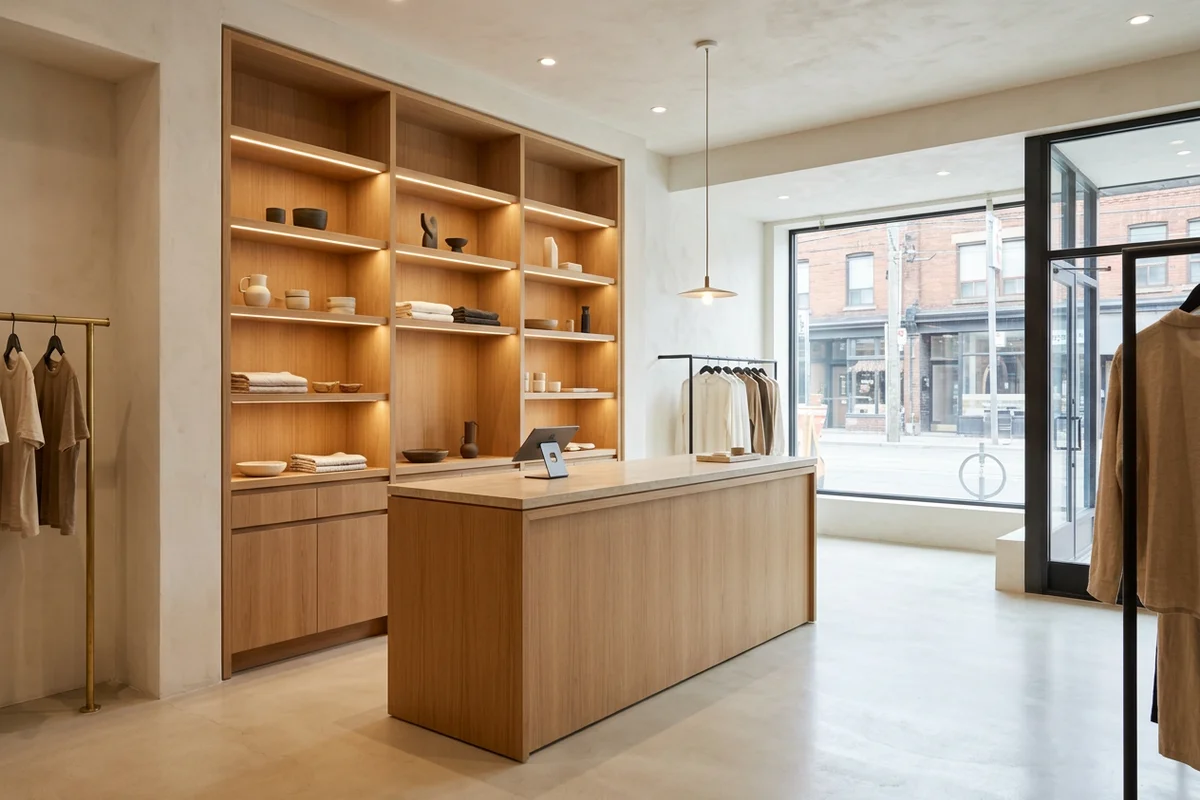
Compact stands with menu storage, a tablet cut-out and cable routing for reservations systems.
Cafe counters
Counters with pastry displays, espresso machine supports and quartz tops.
Banquette bases
Painted or wood bases built for upholstery and constant use.
Restaurant Millwork Pricing
| Scope | Size | Price range |
|---|---|---|
| Cafe counter with display | 10-14 ft | $12,000-$18,000 |
| Bar + host stand | 16-20 ft | $18,000-$26,000 |
| Bar + back bar + host stand | 24-28 ft | $26,000-$35,000 |
| Banquette bases | Per 10 lf | Quoted after CAD |
Kick plates save bar fronts
The bottom 8 inches of a bar take every shoe and stool. A stainless kick plate costs little and keeps the wood face looking new for years.
Common Restaurant Millwork Problems
Swollen edges under the bar top
Fixed with HPL tops and sealed edges.
Equipment that does not fit the cut-outs
Fixed with shop drawings built from supplier specs.
Millwork holding up the opening
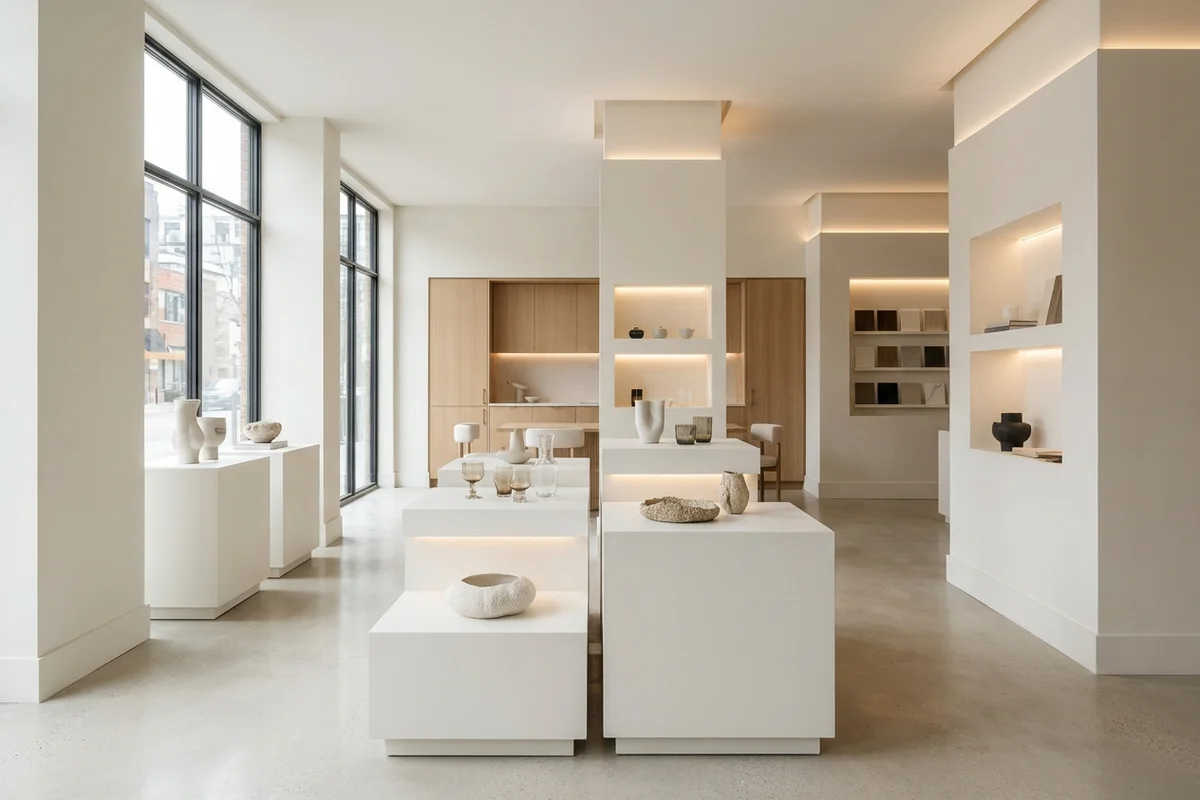
Fixed by fabricating in our shop while the GC works. For retail and showroom fit-outs, see retail store fit-out.
Planning Restaurant Millwork Around Service
Start with service flow, not finishes. Where does a server pick up drinks? Where does the bartender stand during a rush? Where do guests wait, and where does the host check them in? The answers set the bar length, the position of the well and ice bin, the height of the pickup ledge and the size of the host stand.
Then gather equipment specs. Under-bar coolers, ice bins, glass washers, sinks and POS terminals all need exact cut-outs and clearances. Your equipment supplier's spec sheets go straight into our shop drawings so nothing is cut on site.
Materials That Survive Service
HPL working tops
High-pressure laminate resists citrus, alcohol and hot plates and wipes clean at closing.
Hardwood faces
Walnut, white oak or ash faces finished in conversion varnish give warmth without fragile finishes.
Stainless kick plates
Stools and shoes hit the bottom 8 inches of every bar. Stainless keeps it clean.
Quartz for cafes
Caesarstone quartz suits pastry counters and espresso stations.
Caring for Bar and Cafe Millwork
Wipe tops with a non-abrasive cleaner at close. Do not let standing water sit against wood faces. Check kick plate fasteners every few months. Hinges and runners on back-bar storage adjust with a screwdriver.
Questions to Ask Before You Hire a Millwork Shop
- Can you build while my GC finishes the space?
- Will your shop drawings include every equipment cut-out?
- How quickly can you provide a COI?
- What materials do you recommend for the bar top and face?
- Can you install overnight if we are already open?
Restaurant Millwork Across the GTA
Our hospitality work includes bars and host stands in King West and the Entertainment District, cafes in Little Italy, bistros on Ossington and cocktail bars on Dundas West. Every bar and host stand is built in our GTA cabinet shop.