What Is a Retail Store Fit-Out?
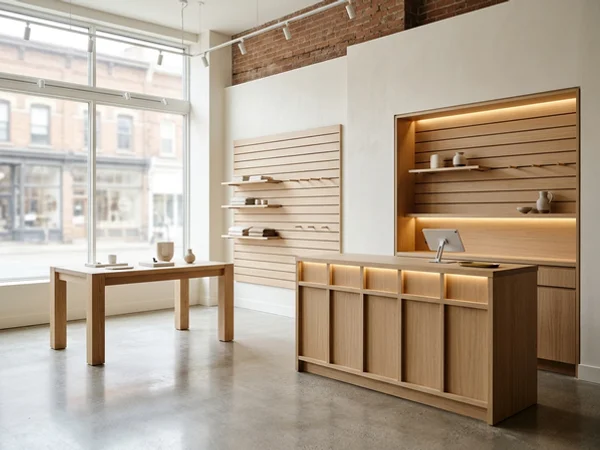
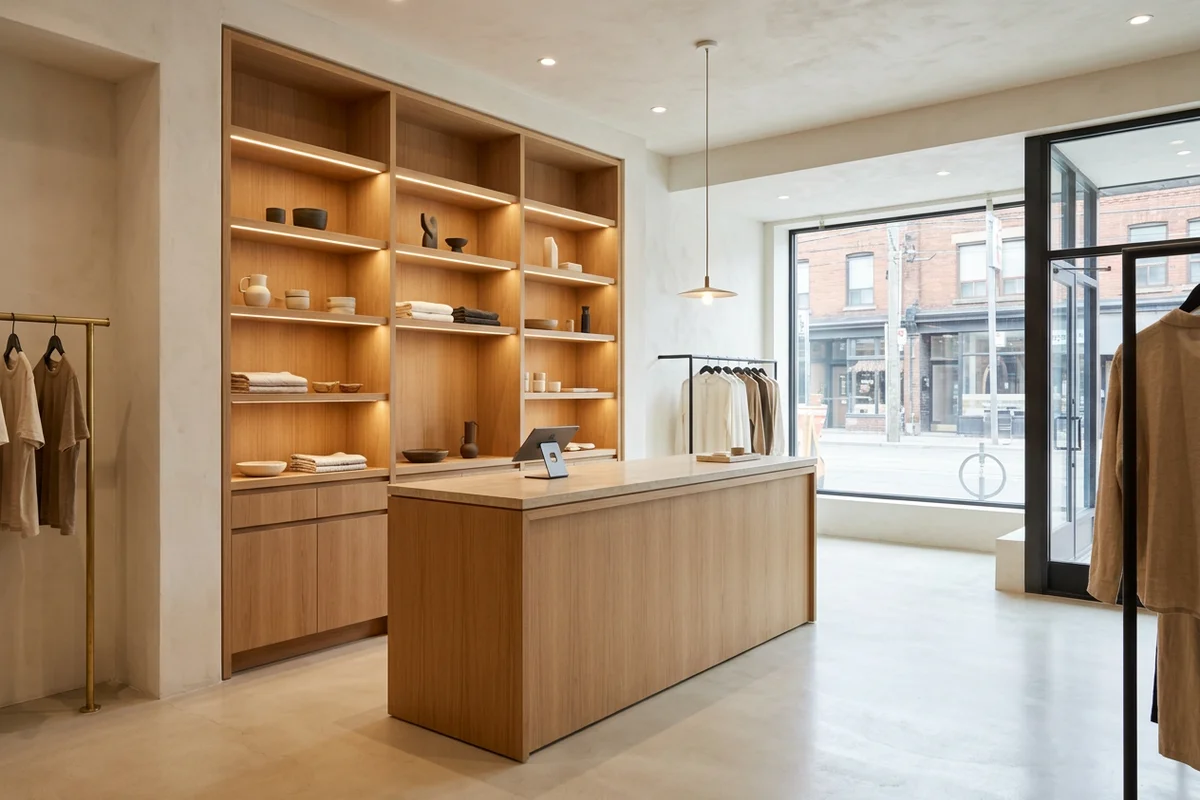
A retail fit-out is the built fixtures that sell your product: the cash wrap, wall displays, display cases and tables. Fixtures need to look like your brand, carry merchandise without sagging and take daily hits from bags, carts and customers. They also have to go in without closing the store for weeks.
We build retail fixtures in our GTA shop alongside our custom millwork, using HPL, hardwood edging and commercial hardware. Most work is in independent boutiques on Queen West, Leslieville and The Junction, and in mall stores downtown.
Types of Retail Fixtures
Cash wraps
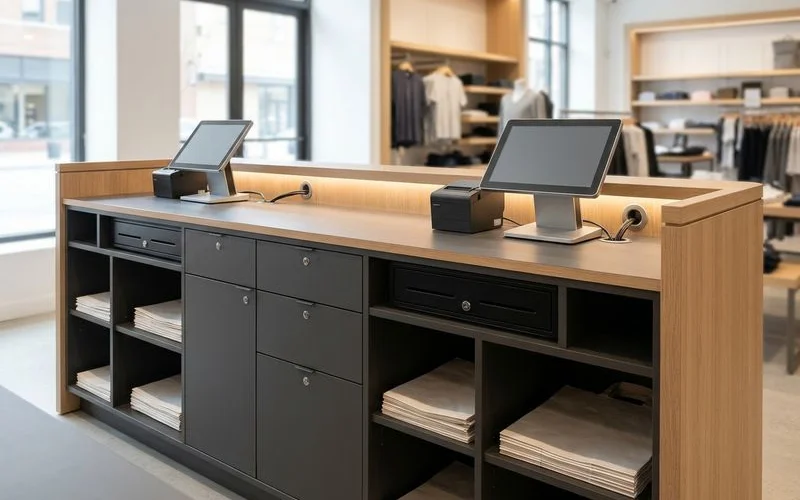
The counter where customers pay: POS routing, bag and tissue storage, locking cash drawers and a durable top.
Wall display systems
Slatwall or shelving systems with hardwood-edged shelves and integrated lighting.
Display cases and tables
Glass-top cases with LED lighting for jewellery and small goods, and display tables with stock drawers.
Multi-store rollouts
Standard fixtures repeated across locations, built from drawings we keep on file.
Retail Fit-Out Pricing
Retail work is quoted per project after a CAD layout. Fixture counts, finishes and lighting vary too much for a single published range. You receive a written quote naming every fixture, material and finish before any deposit.
| Scope | Typical timeline |
|---|---|
| Cash wrap with POS + bag storage | 4-6 wks |
| Wall display system, per 10 lf | 4-6 wks |
| Display case or table | 4-5 wks |
| Full boutique fit-out | 6-8 wks |
Protect the corners
Retail fixtures fail at the corners first. Solid hardwood edging on HPL panels keeps them looking sharp after thousands of bag hits.
Common Retail Fixture Problems
Chipped laminate corners
Fixed with hardwood edging.
Sagging shelves under stock
Fixed with proper shelf spans and commercial supports.
Closing the store for installs
Fixed with overnight and between-day installs. For galleries and design showrooms, see showroom millwork; for hospitality, see restaurant millwork.
Planning a Retail Fit-Out
Start with the merchandise. Apparel needs hanging, face-outs and folded tables. Jewellery needs locked, lit cases at eye level. Home goods need adjustable shelving and display tables with stock below. Write down the product mix and roughly how many units you want on the floor at once; that sets the length of wall systems and the number of tables and cases.
Then plan the path. Customers usually turn right on entering, so the first wall is your best display space. The cash wrap belongs where staff can see the door and the fitting rooms. Keep main aisles at least 36 inches wide, and wider if your customers bring strollers.
Brand and Material Choices
Brand colours
Painted finishes are colour-matched to your brand guide; wood species and stains can be matched to a sample.
HPL for durability
HPL panels handle daily knocks from bags and carts.
Hardwood edging
Solid edges protect corners, the first place retail fixtures fail.
Lighting
LED channels in cases and shelving light product, not the floor.
Fire rating
Where landlords or code require it, we use ASTM E84 Class A panels.
Caring for Store Fixtures
Clean HPL with a mild cleaner, check shelf supports when you re-merchandise, and tighten slatwall inserts during seasonal changeovers. Hinges and locks on cases adjust with a screwdriver.
Questions to Ask Before You Hire a Fixture Shop
- Can you install overnight or between trading days?
- Will you provide shop drawings for my landlord?
- How quickly can you issue a COI?
- Can you repeat these fixtures in my next location?
- What materials will hold up to daily use?
Retail Fit-Outs Across the GTA
Our retail work includes boutiques on Queen West and in Leslieville and The Junction, jewellery cases in Yorkville Village, and mall stores downtown near Yonge-Dundas. Fixtures are cut and finished in the same shop as our custom cabinetry in Toronto.